
Aluminium and zamak die-castings
Aluminium and zamak die-casting is a manufacturing process widely used in industrial sectors to produce complex-shaped metal components with the guarantee of good dimensional accuracy and consistent quality over time.
This technology ranks among the most advanced casting processes, designed to meet the needs of structured industrial production, where process control and repeatability are key factors.
This page explores what die-casting is, how die-casting processes work, when it is preferable to use it over other casting processes, and why the Metalfusioni approach is suited to continuous flow industrial production.
What die-casting is
Die-casting is a metal casting process where molten metal is injected at high pressure into a mould, filling the cavities that define the geometry of the final component.
Once injected, the metal solidifies rapidly upon contact with the metal mould, resulting in a die-cast part with smooth surfaces, good precision and repeatable dimensional characteristics.
Unlike gravity die-casting or other more traditional casting processes, die-casting is designed for a fast and repeatable manufacturing process, suitable for medium to high volumes and components with complex geometries.
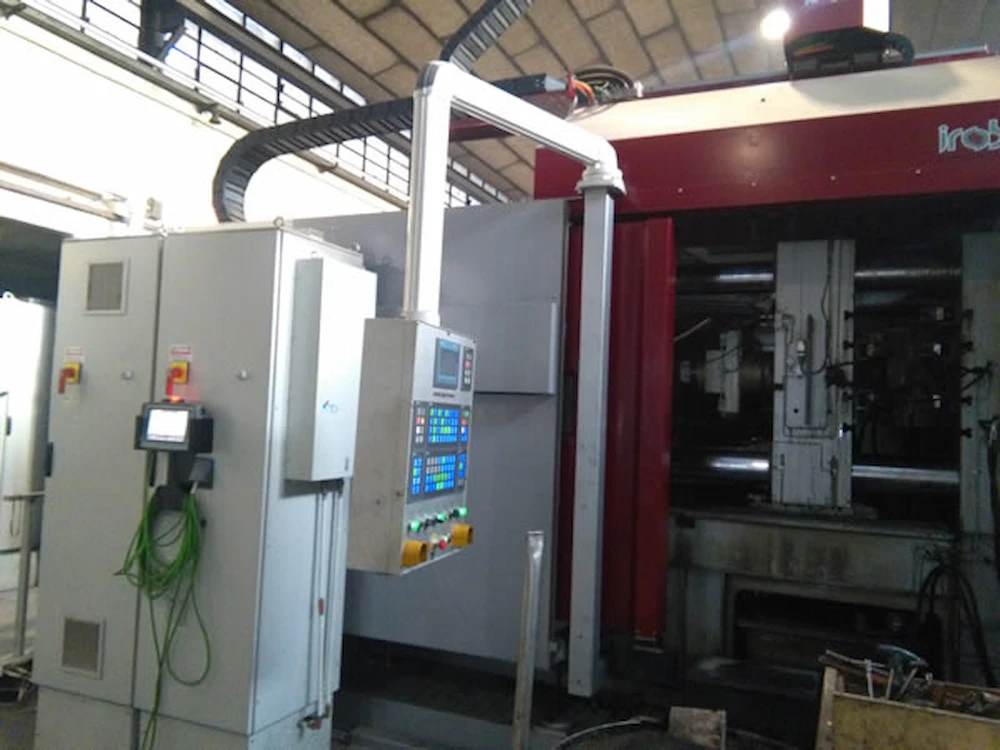
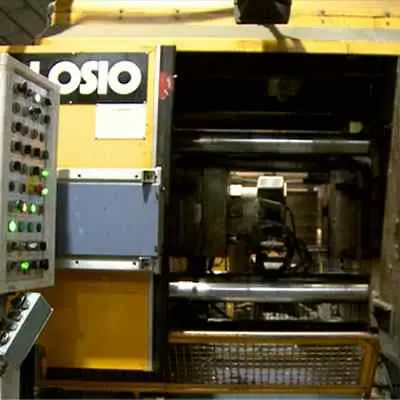
The die-casting process: how it works
In the die-casting process, molten metal is forced into the mould via a high-pressure injection system.
The rapid filling of the mould cavity allows complex geometric details to be reproduced faithfully, while maintaining a good surface finish.
The production cycle comprises several stages:
- melting the metal alloy
- injection of the metal into the mould cavity
- solidification, influenced by the cooling time
- removal of the die-cast part
The design of the die-casting process, particularly during the mould design phase, has a direct impact on the quality of the casting, the mechanical properties of the component and production stability over time.
Aluminium die-casting
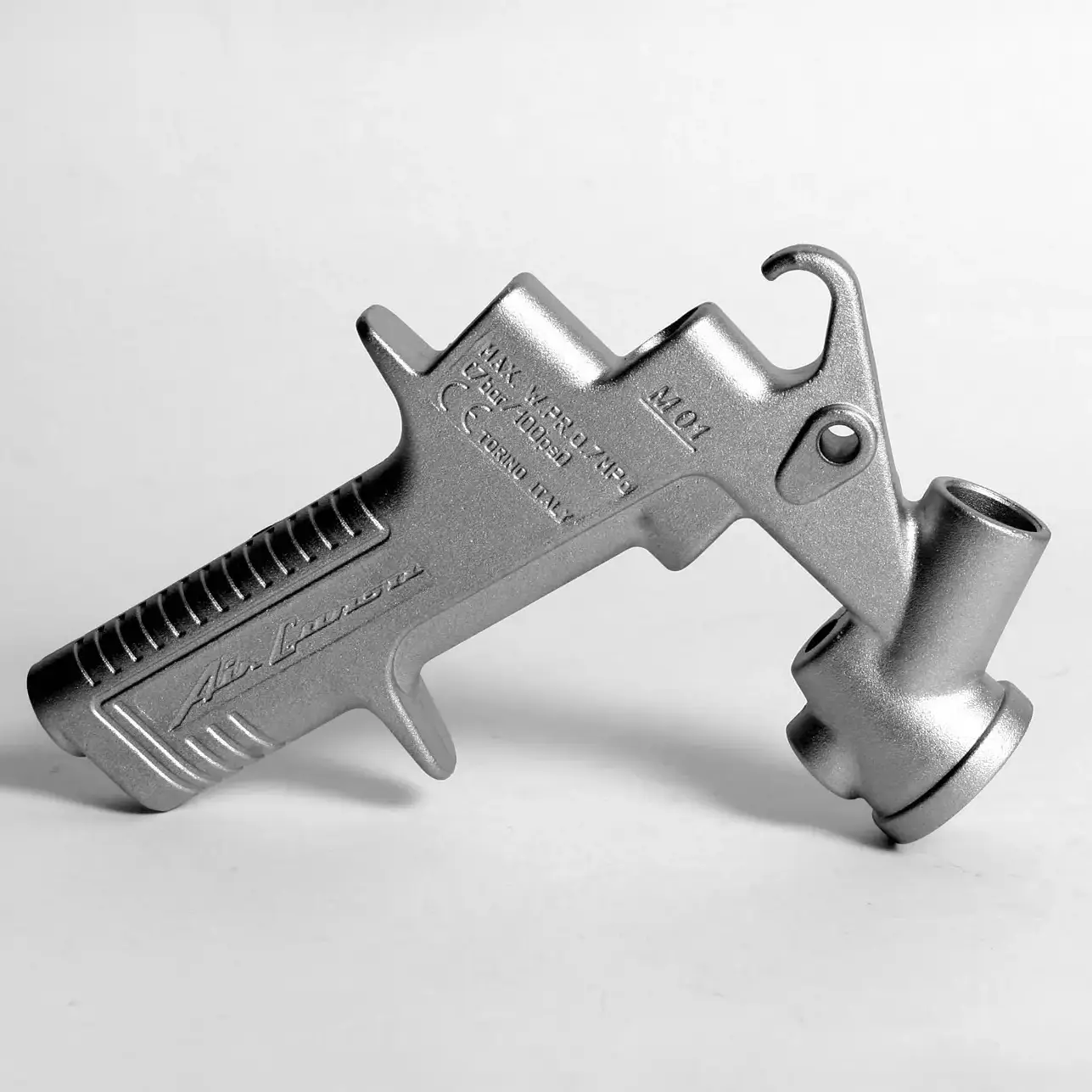
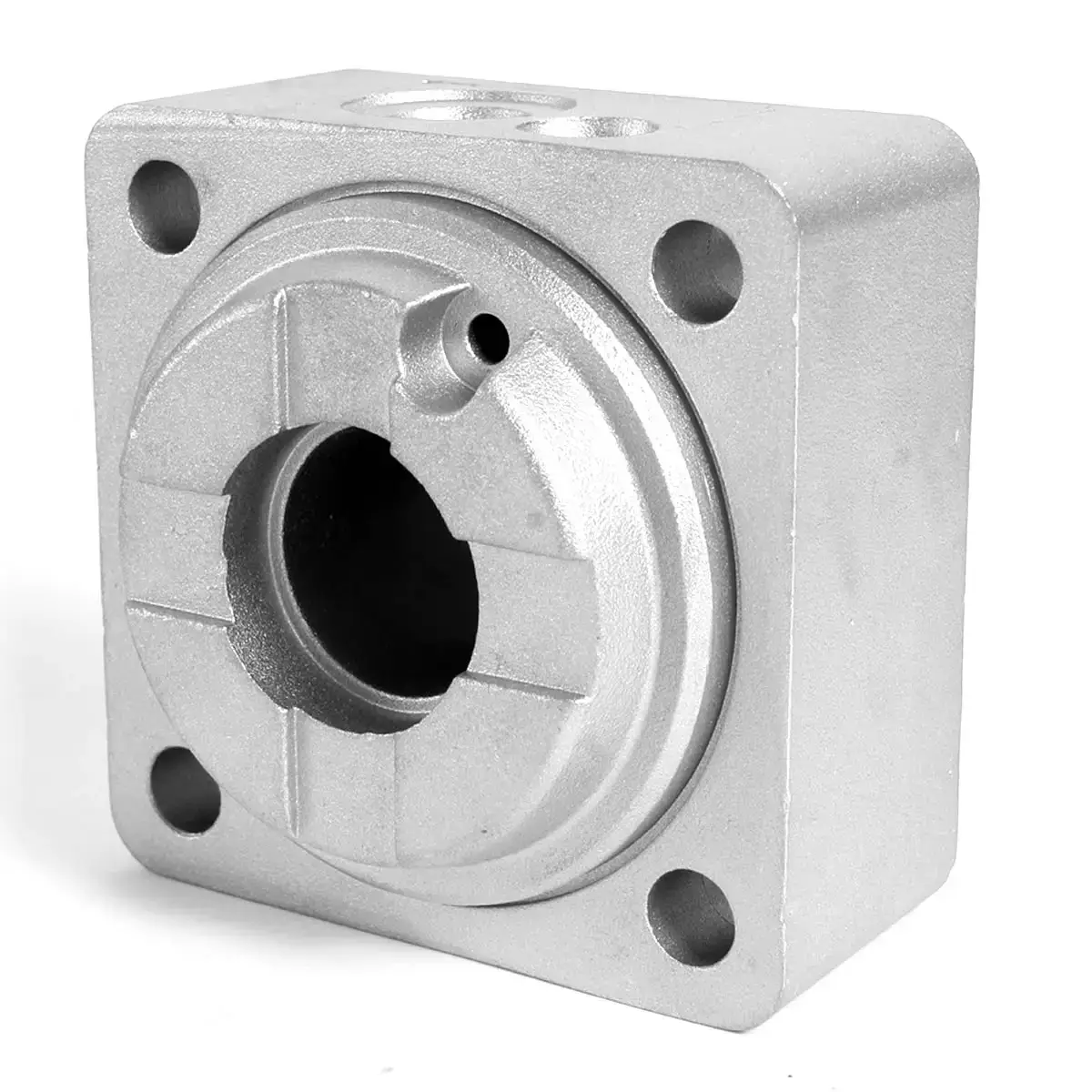
Aluminium die-casting is one of the most widespread applications of this technology. Aluminium and its alloys offer a good balance between lightness, mechanical strength and workability, making them suitable for several industrial sectors.
Die-casting makes it possible to:
- manufacture parts with complex geometries
- obtain finished products ready for further process
- maintain a high level of quality and repeatability
Aluminium die-casting is particularly suitable when the weight of the component is a critical factor and when it is necessary to integrate multiple functions into a single die-cast part.
01
Zamak die-casting
Zamak die-casting uses zinc-based alloys and is suitable for small components requiring high precision and excellent surface quality.
Thanks to the properties of the material, zamak offers:
- reduced filling and solidification times
- very tight dimensional tolerances
- surfaces particularly suited to aesthetic finishes
It is the perfect solution when geometric detail and surface quality are priority requirements for the finished product.
02
Hot-chamber and cold-chamber die-casting. The differences
Die-casting is a metal casting process in which molten material is injected at high pressure into the mould, filling the mould cavities that define the geometry of the final component.
Once injected, the metal solidifies rapidly upon contact with the metal mould, resulting in a die- cast part with smooth surfaces, good precision and repeatable dimensional characteristics.
Unlike gravity die-casting or other more traditional casting processes, die-casting is
designed for a fast and repeatable manufacturing process, suitable for medium to high volumes and components with complex geometries.
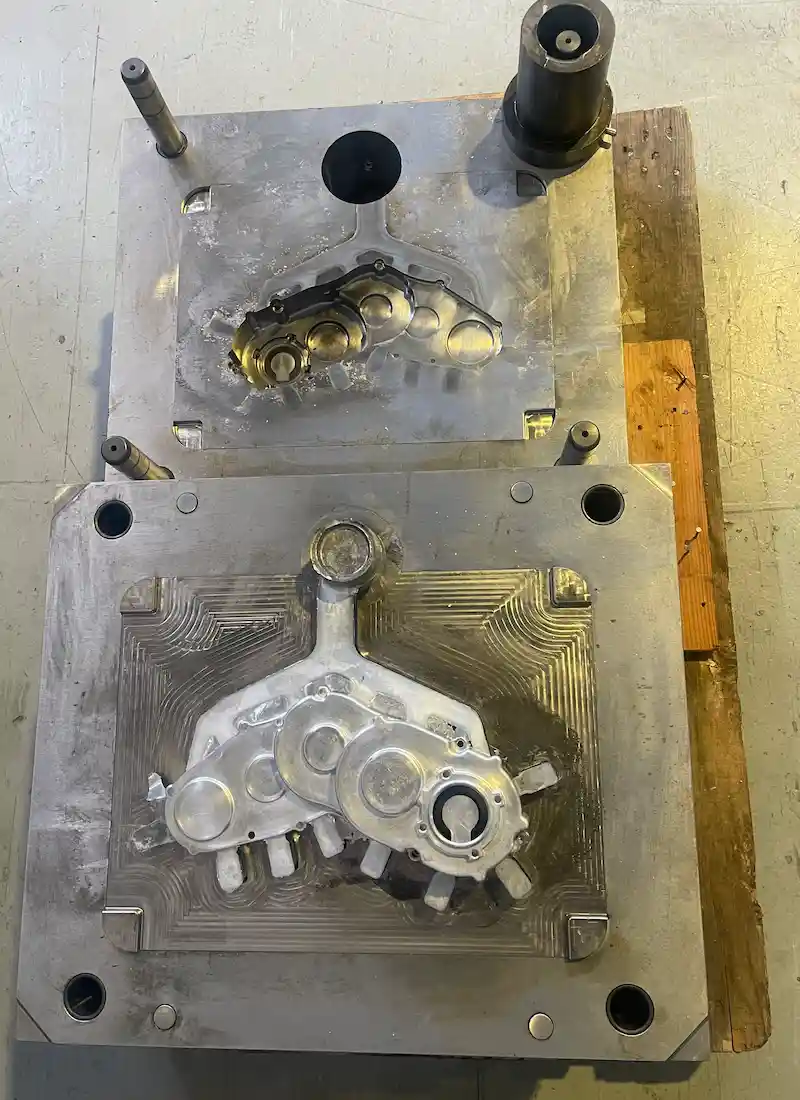
The role of die-casting moulds
Die-casting moulds are central to the process. Their design influences:
- cavity filling
- correct draft of the part
- the presence of adequate draft angles
- surface quality and dimensional stability
A properly designed mould helps to minimise issues, improve repeatability and ensure consistent production over time.
When to choose die-casting
Die-casting should not be chosen automatically: it is the best option with a design with specific features.
In particular, die-casting is suitable when:
- the production volume justifies the investment required by the mould
- the component must have complex shapes
- it is necessary to manufacture parts with good dimensional accuracy
- the unit cost needs to decrease over time
Compared to other casting processes, die-casting offers advantages in terms of productivity and repeatability, but it requires careful assessment right from the initial design stage.
The advantages of die-casting in the manufacturing
process
The advantages of die-casting become particularly evident in the medium-long term, once the process has been properly designed and stabilised.
Unlike other casting processes, die-casting delivers advantages not only for the single component but for the entire manufacturing process, impacting costs, quality and continuity.
One of the main advantages of die-casting is the ability to reduce subsequent processing operations. Thanks to the injection of molten metal into the mould and the rapid filling of the mould cavities, it is possible to produce a die-cast part with a geometry very close to the final product. This allows for a reduction in additional operations, simplifies the production cycle and minimises overall processing times.
A well-designed die-casting process also improves the consistency of the finished products. The repeatability of the cycle, combined with control over cooling time and mould characteristics, enables the production of parts with consistent dimensional and functional properties. This is particularly important in industrial production, where component variability can affect the assembly or operation of the final system.
Die-casting also helps to stabilise the manufacturing process over time. When the mould design phase, the casting process and quality control are properly integrated, the process becomes more predictable and controllable. The stability of the production cycle is a key factor for those who need to plan continuous supplies and manage continuous flow production
volumes.
Compared to other casting processes, such as gravity die-casting or more traditional technologies, die-casting offers a significant advantage in terms of repeatability and productivity, despite the initial investment required by the mould. This is why the initial project assessment is crucial: die-casting is cost-effective when the production context allows these advantages to be realised over time.
The key to the entire process lies in the seamless integration of mould design, casting process and quality control. Only when these elements work together seamlessly, it is possible to fully exploit the advantages offered by die-casting processes and achieve an efficient, stable manufacturing process suitable for structured industrial production.
In summary, a well-designed die-casting process allows for:
- post-processing reduction
- improvement of finished product consistency
- stabilisation of the manufacturing process
The key is the correct integration between mould design, casting process and quality control.
Why choose the Metalfusioni approach
Metalfusioni specialises in aluminium and zamak die-casting, with an approach tailored to structured industrial environments.
The company supports the customer at every stage, from designing and selecting the most suitable technology to managing the manufacturing process and storing the moulds.
The aim is not merely to produce the part, but to make the process reliable over time, supporting continuous flow production and complex industrial environments.
An integrated process, from mould to finished product
The Metalfusioni approach integrates:
- mould design and management
- die-casting
- post-processing
- quality control throughout the process
This integrated approach ensures consistency across the various stages of the manufacturing process and reduces operational variables.
01
Die-casting, quality and continuous flow production
In an industrial context, quality is not just about the single die-cast part, but about the consistency of results over time.
Quality control applied throughout the manufacturing process allows us to verify the conformity of components and ensure production stability, in accordance with the requirements agreed with the customer.
Discover Metalfusioni quality control process and certifications
02
A technology serving various industrial sectors
Aluminium and zamak die-casting is used in several industrial sectors, including lighting systems, electromechanics, construction, industrial components, automotive and telecommunications.
In every field, the process is tailored to the specific requirements of the product and the application context.
Let’s have a look at your project
Are you looking for a reliable partner for aluminium die-casting and the management of continuous flow industrial production?